Menu Pricing
Delivery economics: what commission really costs
By Noriva · 18 August 2026
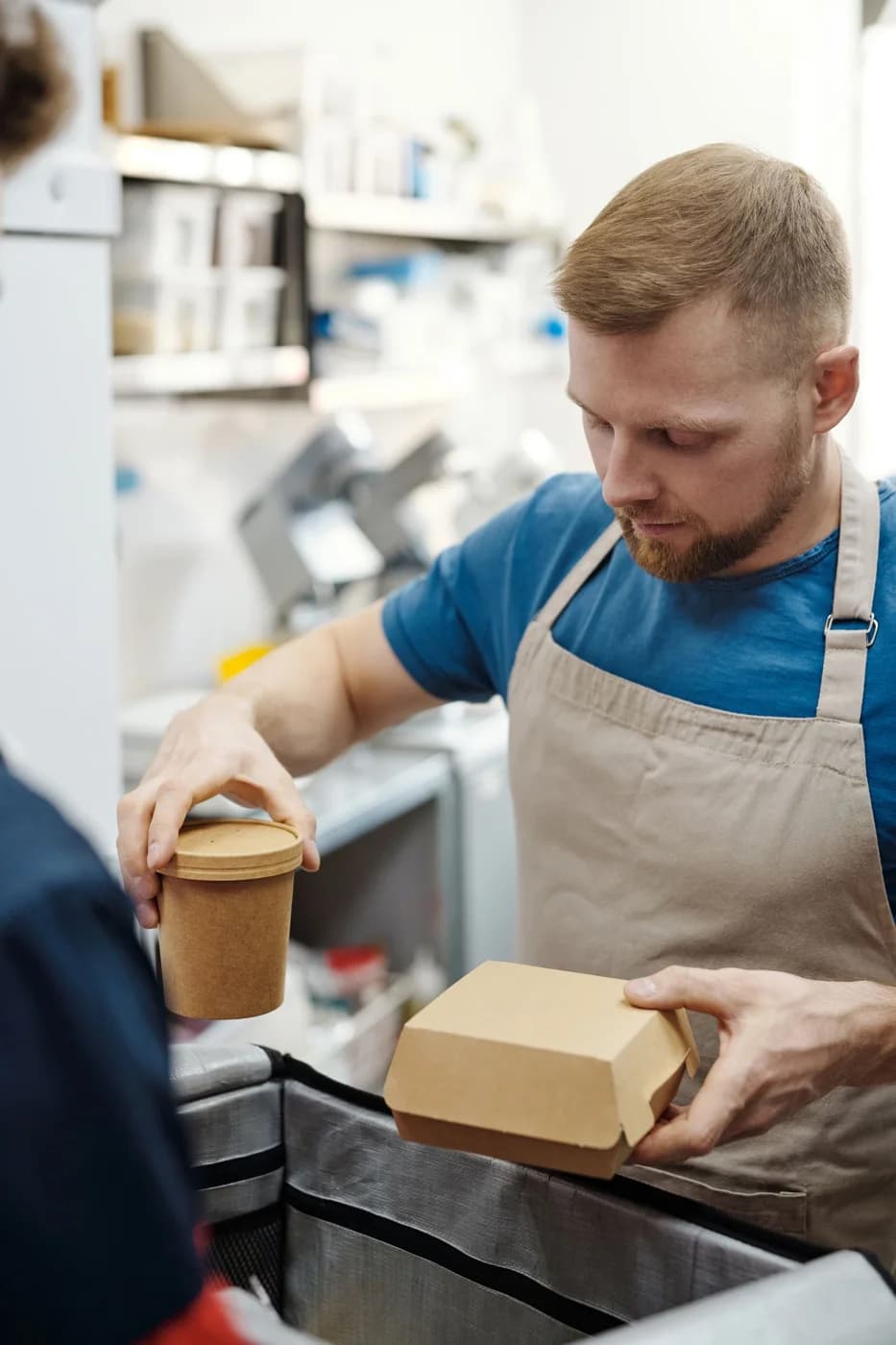
Listing the dine-in menu at dine-in prices on a delivery platform is the most common way a profitable restaurant sells at a loss without noticing.
Delivery is not a channel that sells the same food to more people. It is a different business with a different cost structure, a different competitive set and a different quality risk, and it is usually run as if none of that were true.
## The arithmetic nobody redoes
The illustrative figures below are arithmetic, not a benchmark.
Take a dish that sells for 40 in the dining room with a food cost of 12. Contribution is 28, a comfortable margin.
Now list it on a platform at the same 40. Commission at, say, 25 per cent takes 10. Packaging costs 3. Food cost is still 12. Contribution is 15 — a little over half of what the same dish earns at a table.
That is still positive, which is why the problem hides. Now apply the same arithmetic to a dish with a higher food cost — a protein-led main at 60 with a food cost of 26. Commission takes 15, packaging 3, and contribution falls to 16 on a much higher-value item. And on any dish sold with a platform-funded discount the venue partly absorbs, the number can go negative.
## Four decisions that matter more than price
**Which items are listed at all.** The delivery menu should be shorter than the dine-in menu, and the items that come off should be the ones that travel badly or contribute least after commission. A dish that arrives soggy does more brand damage than the order was worth.
**What the price is.** A delivery price that differs from the dine-in price is standard practice and generally expected. What damages trust is an inconsistent difference, not a stated one.
**How items are bundled.** Bundles and minimum-order thresholds move average order value, which spreads the fixed elements of the cost — packaging, the driver's time, the platform's fee floor — across more contribution.
**How the listing is built.** Aggregator listings are browsed, not read. Photography, item order and category naming decide a large share of what gets ordered, and they are usually inherited from the dine-in menu without thought.
## Own delivery versus platforms
Running your own delivery replaces a variable cost with a fixed one. That is worth doing only above a certain order volume, and the calculation is specific to your average order value, your radius and your driver cost. It is a calculation, not a principle — and it is worth redoing whenever commission terms or volume change materially.
Most venues benefit from a hybrid: platforms for reach and discovery, direct ordering for repeat guests, with the direct channel priced to make it obviously worth using.
## Practical recommendations
1. Rebuild contribution for every listed item after commission and packaging. Do this before touching price.
2. Delist anything that is negative after that calculation, and anything that arrives materially worse than it leaves.
3. Set delivery prices deliberately and consistently. An erratic gap is worse than a visible one.
4. Look at your average order value as a lever. Raising it is usually easier than raising prices.
5. Treat the platform listing as a shopfront: photograph the items you want to sell and order the categories the way you want them browsed.
6. Re-run the whole calculation whenever commission terms change.
## In short
Delivery can be a genuinely profitable channel, but only if it is priced and curated as its own business. The venues that lose money on delivery are rarely the ones that chose to; they are the ones that never redid the arithmetic after the platform took its share.
- #delivery
- #pricing
- #profitability